

 Home
Home
 About Us
 Services
 Pricing
 Contact Us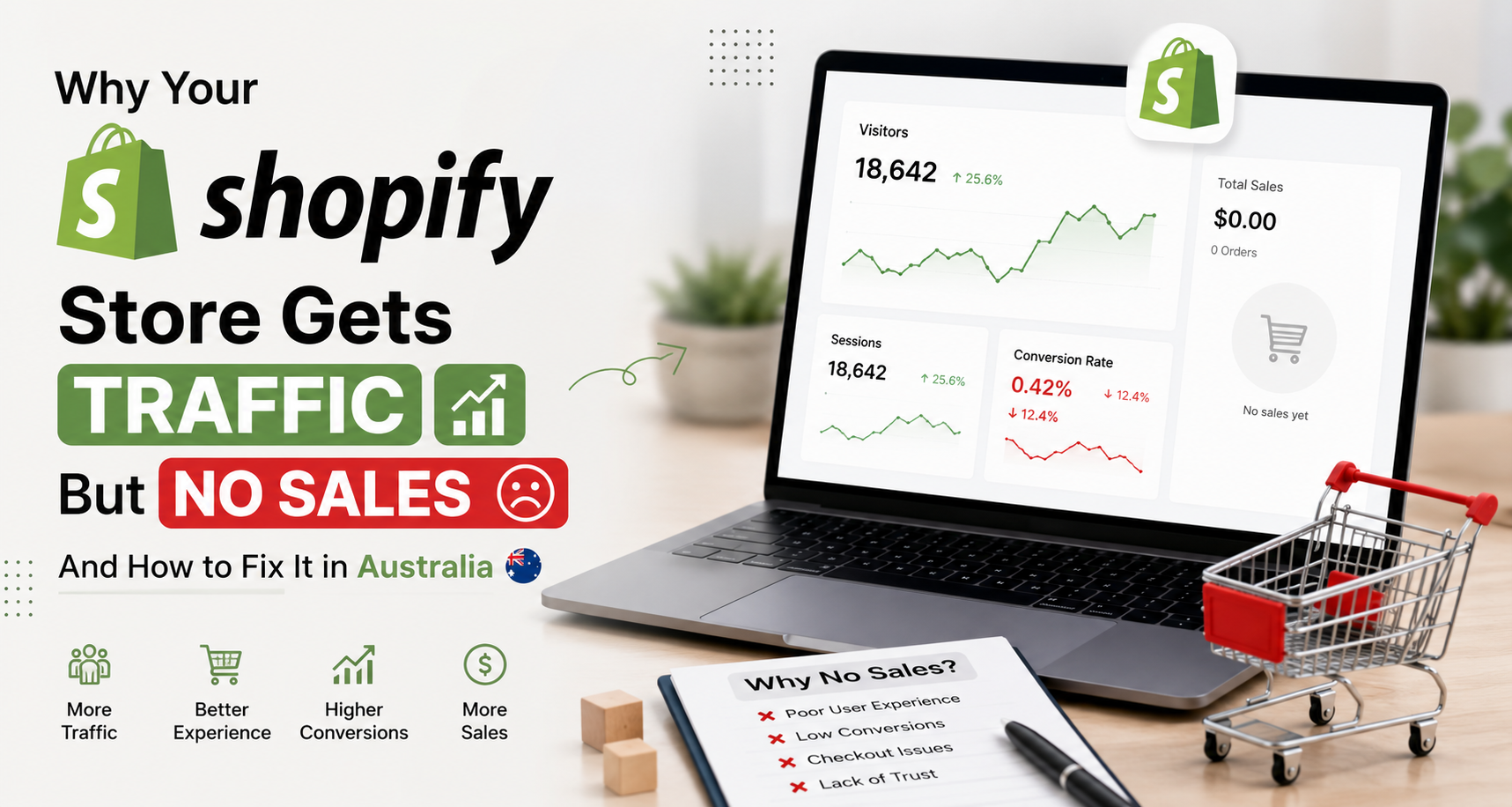
Why Your Shopify Store Gets Traffic but No Sales
If your Shopify store gets traffic but no sales, the problem is usually not visibility — it is conversion. Many ecommerce brands in Australia invest in Shopify SEO, paid ads, and social media marketing, but still struggle with low sales because their store is not built to convert visitors into buyers. This is where Shopify conversion rate optimization becomes important. From poor product page design and weak trust signals to slow site speed and cart abandonment, several factors can prevent shoppers from completing a purchase. If you run an Australian Shopify store, these issues can become even more noticeable because local shoppers expect clear shipping, fast delivery, and a smooth checkout experience. In this article, we’ll break down the most common reasons your Shopify store is not converting, the key ecommerce conversion issues to check, and how to improve sales without simply chasing more traffic.
1. You May Be Attracting the Wrong Traffic
One of the biggest reasons a Shopify store gets traffic but no sales is that the traffic is not qualified. You may be ranking for broad keywords or running ads that bring in people who are browsing, not buying. High traffic numbers look good, but if the visitors don’t have purchase intent, sales will stay low. To improve results, focus on Shopify SEO Australia strategies that target buyer intent, product-specific keywords, and landing pages designed for conversion.
2. Your Product Pages Need Better Optimization
Weak product pages are another major reason for low sales. If your descriptions are too short, your images are low quality, or your benefits are unclear, visitors may leave before adding anything to cart. Strong Shopify product page optimization is essential for any store that wants better conversion rates. Every product page should explain what the product does, why it is valuable, and why customers should buy from you instead of a competitor.
A good product page should include:
• Clear product descriptions
• High-quality images and videos
• Customer reviews and testimonials
• Shipping and delivery details
• FAQs to remove objections
3. Your Store May Lack Trust Signals
Trust is one of the biggest drivers of ecommerce conversion. If your store does not feel credible, shoppers will hesitate to buy. This is especially true for an Australian Shopify store, where customers often want clear contact details, local shipping information, and reliable return policies.
• Missing reviews
• Weak branding
• Unclear policies
• Poor website design
• No visible contact information
Adding trust signals can have a direct impact on sales.
4. Slow Loading Speed Can Hurt Shopify Sales
Website speed plays a huge role in Shopify conversion rate optimization. If your pages load slowly, users may leave before they ever see your offer. Slow load times are often caused by oversized images, too many apps, or an unoptimized theme. Improving speed can reduce bounce rates, improve user experience, and help increase sales across both desktop and mobile.
5. Checkout Friction Leads to Cart Abandonment
Another common issue is cart abandonment. Customers may be ready to buy, but a complicated checkout, hidden shipping fees, or too few payment options can cause them to leave. This is one of the most common Shopify sales problems for online stores.
To reduce cart abandonment:
• Keep checkout simple
• Show shipping costs early
• Offer payment methods customers trust
• Remove unnecessary form fields
• Make delivery times clear

Optimised Shopify stores turn visitors into customers.
6. Shipping Costs May Be Stopping Purchases
High shipping costs can quickly kill a sale. Even if a product is priced well, customers may abandon their cart once they see the delivery cost. This is especially important for stores targeting Shopify SEO Australia traffic, since Australian shoppers are often very aware of shipping charges and delivery timelines.
Consider:
• Free shipping thresholds
• Flat shipping rates
• Local delivery options
• Clear delivery estimates
These can make your offer more attractive and improve conversions.
7. Weak Calls to Action Reduce Conversions
A store can get plenty of traffic and still fail to convert if visitors are not guided clearly. Strong calls to action are a core part of Shopify CRO. Buttons like “Add to Cart,” “Buy Now,” and “Shop the Collection” should be visible, clear, and easy to tap. If customers are unsure what to do next, they may leave without making a purchase.
8. Mobile Experience Matters More Than Ever
Mobile traffic is a major part of ecommerce, so if your mobile experience is weak, your Shopify store not converting problem will get worse. A store that looks fine on desktop may still perform poorly on mobile if buttons are too small, text is hard to read, or pages load slowly.
Make sure your site is:
• Responsive
• Fast
• Easy to navigate
• Simple to checkout on mobile
9. Pricing May Not Match Perceived Value
Price is not always the issue. Sometimes the real problem is perceived value. If your product looks expensive but the page does not explain why it is worth the price, visitors will hesitate. On the other hand, pricing something too low can also create doubt. The key is to make the value obvious through better presentation, stronger benefits, and social proof.
10. You Are Not Following Up With Interested Visitors
Most people do not buy the first time they visit a store. If they leave, that does not mean they are not interested. It often just means they need more time. That is why follow-up matters. Retargeting ads, abandoned cart emails, and email capture forms can help bring visitors back and recover lost sales.
How to Improve Shopify Sales
If your Shopify store gets traffic but no sales, the best way to improve performance is to review traffic quality, product page optimization, trust signals, speed, and checkout flow. These are the main areas that affect Shopify conversion rate optimization. The goal is not just more traffic — it is better traffic and a better buying experience.
Final Thoughts
If your Australian Shopify store gets visitors but no sales, the solution usually lies in improving your store’s conversion elements rather than increasing traffic alone. By focusing on Shopify SEO, Shopify CRO, product page optimization, and a smoother checkout experience, you can turn more visitors into paying customers. With the right strategy, your store can move from traffic with no sales to a more profitable and scalable ecommerce business.
FAQs
Why does my Shopify store get traffic but no sales?
Your store may be attracting the wrong audience, have weak product pages, lack trust signals, or create friction during checkout. These are common reasons a Shopify store gets traffic but no sales.
How do I improve Shopify conversion rate optimization?
To improve Shopify CRO, focus on better product page content, faster loading speed, stronger calls to action, trust signals, and a smoother checkout process.
Why is my Shopify store not converting in Australia?
Australian shoppers often expect clear shipping information, fast delivery, AUD pricing, and trustworthy local support. If these are missing, your Shopify store may not convert well.
How can I reduce cart abandonment on Shopify?
Show shipping costs early, simplify checkout, offer multiple payment methods, and follow up with abandoned cart emails to reduce cart abandonment.
What is the best way to improve Shopify sales?
The best way to improve Shopify sales is to combine Shopify SEO, product page optimization, trust-building, speed improvements, and conversion-focused design.

Cool Vision Studio Team
Shopify Conversion Specialists
Helping Australian ecommerce businesses transform traffic into measurable revenue through conversion optimisation.